You Won’t Believe What We Ate at Uluru
Standing under a sky painted with stars, I bit into a warm damper bread cooked over open flames—this was my first taste of true Australian food culture at Uluru. Far beyond kangaroo burgers and meat pies, the real flavors come from ancient traditions, native ingredients, and shared moments. What I discovered wasn’t just a meal; it was a story passed down for thousands of years. The aroma of woodsmoke, the crunch of roasted seeds, the tang of citrus from a fruit grown in red soil—each bite carried history. This journey into flavor revealed more than cuisine; it unveiled a living culture, deeply rooted in land and identity, inviting travelers not only to eat but to understand.
The First Bite: My Unexpected Food Journey Begins
As the sun rose over the vast expanse of red rock and endless sky, Uluru emerged like a sentinel from the dawn. The light shifted from deep indigo to fiery orange, casting long shadows across the desert floor. I had come expecting rugged landscapes and spiritual silence, but food was not at the forefront of my mind. Like many visitors, I imagined campfire sausages, instant coffee, and packaged snacks—the staples of outback travel. What I did not expect was to be welcomed with a breakfast that felt both ancient and entirely new: a meal rooted in knowledge older than any written record.
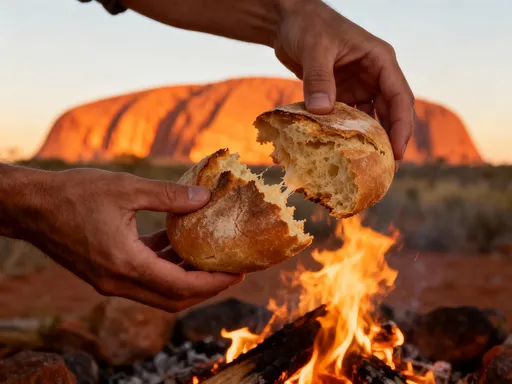
The first taste came from a round, golden loaf of damper, baked in a sand oven beside a crackling fire. Unlike the plain version found in modern kitchens, this one was infused with wattleseed, a native ingredient ground finely and mixed into the dough. The result was a nutty, slightly coffee-like flavor that lingered on the palate. Beside it sat a small bowl of roasted macadamia dip, creamy and rich, yet subtly earthy—an homage to one of Australia’s few native nuts cultivated for global taste. A warm cup of lemon myrtle tea completed the plate, its citrusy fragrance rising with the steam, calming the senses and sharpening the appetite.
What struck me most was not just the flavor, but the context. This meal was not prepared in a commercial kitchen or reheated from a freezer. It was made by hand, using methods passed down through countless generations. As I chewed slowly, I felt a shift—an unexpected emotional resonance. My curiosity turned to respect. This was not novelty cuisine for tourists; it was an invitation into a worldview where food is never separate from land, season, or story. The simplicity of the meal contrasted with its depth, reminding me that nourishment is more than calories—it is connection.
Beyond the Barbecue: Redefining Australian Cuisine
Most international perceptions of Australian food begin and end with barbecues, meat pies, and Vegemite on toast. While these items have their place in contemporary life, they represent only a fraction of the country’s culinary soul. At Uluru, that narrow image dissolves. Here, Australian cuisine reveals its true origins: a sophisticated system of food knowledge developed over 60,000 years by the Anangu people, the Traditional Owners of this land. Their understanding of edible plants, seasonal cycles, and sustainable harvesting has shaped a diet that is as resilient as the environment itself.
Central to this food culture are native ingredients, many of which remain unfamiliar even to Australians living in cities. Take the kakadu plum, for example—one of the world’s richest natural sources of vitamin C. Grown in the northern regions and traded southward, it carries a tart, almost sour taste that balances well in sauces and preserves. Then there is the finger lime, a small, cylindrical fruit filled with citrus ‘caviar’—tiny juice beads that burst with tangy freshness. Often called ‘nature’s pearls,’ it adds texture and brightness to seafood dishes. Bush tomatoes, though small and dried, offer a deep umami flavor reminiscent of sun-dried tomatoes, yet more complex, with hints of caramel and spice.
These ingredients are not just flavors—they are cultural markers. Each one is tied to specific Dreaming stories, traditional trade routes, and seasonal calendars. When visitors taste them today, they are engaging with a living archive of knowledge. Modern Indigenous-led food experiences at Uluru integrate these elements not as exotic add-ons, but as central pillars. Chefs trained in both traditional practices and contemporary techniques craft menus that honor authenticity while ensuring accessibility. The goal is not to create fusion for trendiness, but to share a culinary heritage that has long been overlooked on national and global stages.
Dining Under the Stars: A Night to Remember
One evening, I joined a curated outdoor dining experience near the base of Uluru, where the rock loomed silently against a darkening sky. The setting was simple yet profound: low wooden tables arranged in a semi-circle, clothed in natural linens, lit by flickering lanterns and the glow of a central fire. There were no loudspeakers, no background music—only the occasional crackle of burning wood and the soft murmur of conversation. As dusk deepened, the stars emerged one by one, until the Milky Way stretched across the heavens like a river of light.
The meal that followed was a carefully composed journey through taste, texture, and tradition. It began with a delicate amuse-bouche: a single emu egg ravioli in a native herb broth. The richness of the yolk, slightly gamier than chicken, was balanced by the aromatic lift of pepperleaf and wild thyme. Next came grilled barramundi, its skin crisp from the fire, served with a sauce made from Davidson’s plum and lemon aspen. The fish, sourced from sustainable inland aquaculture, flaked apart with gentle pressure, releasing a clean, oceanic flavor enhanced by the fruit’s natural acidity.
The centerpiece of the evening was a slow-roasted kangaroo loin, marinated in a paste of wattleseed and mountain pepper. Cooked to a perfect medium, it was lean yet tender, with a deep, iron-rich taste that spoke of the outback’s wildness. It was served with roasted root vegetables—native yams and bush carrots—cooked in their skins to preserve nutrients and flavor. The final course was a quandong tart, its deep red filling tart and floral, topped with a dollop of macadamia cream. Quandong, a desert peach, grows in harsh conditions and has long been a source of both food and medicine. Eating it felt symbolic—a celebration of endurance.
But the food was only part of the experience. Between courses, an elder shared stories in a soft, measured voice—stories of creation, of ancestral beings shaping the land, of the importance of balance and respect. No translations were needed; the tone, the gestures, the silence that followed each sentence carried meaning. In that moment, dining became ceremony. It was not about consumption, but participation. We were not guests at a restaurant; we were witnesses to a culture that feeds both body and spirit.
Who Feeds the Land? The People Behind the Plate
Every dish served at Uluru is the result of collaboration, care, and cultural stewardship. The Anangu people are not merely hosts—they are knowledge holders, educators, and guardians of a culinary tradition that predates colonization. In recent years, there has been a growing movement to place Indigenous communities at the center of food tourism, ensuring that they lead, benefit, and retain control over how their culture is shared. This shift is not just ethical; it is essential for authenticity.
Local guides often begin the experience by welcoming visitors to Country, explaining the significance of the land and the rules for respectful behavior. Some are elders who have spent decades preserving language and stories; others are younger members trained in hospitality and conservation. Behind the scenes, Anangu chefs and food artisans prepare ingredients with precision and reverence. They know where each plant grows, when it is ready for harvest, and how to use every part without waste. Their kitchens are often solar-powered, built with local materials, and designed to minimize environmental impact.
Visitors play a crucial role in this ecosystem. By choosing experiences led by Traditional Owners, they support economic independence and cultural preservation. But more than that, they have the opportunity to engage meaningfully. This means listening more than speaking, asking questions with humility, and understanding that some knowledge is not meant to be shared. It means refraining from treating sacred practices as entertainment or photo opportunities. When a meal is offered, it is an act of generosity—not performance. Honoring that gift means eating with gratitude, learning with openness, and leaving with greater awareness.
From Desert to Dish: How Food Grows in the Harshest Place
At first glance, Central Australia appears barren—a land of dust, rock, and extreme heat. Yet within this seemingly inhospitable environment lies a surprising abundance of edible plants, many of which have evolved to thrive with minimal water and intense sunlight. The Anangu have long understood how to read the landscape: where to find water-storing roots after rain, which seeds are safe to grind into flour, and which fruits signal the change of seasons. This knowledge forms the foundation of a resilient food system that modern sustainability efforts are only beginning to appreciate.
Today, sustainable food practices at Uluru combine ancient wisdom with modern innovation. Water-wise gardens, often built using traditional wicking beds or shaded pits, grow native herbs and vegetables with minimal irrigation. These gardens are not only productive but educational, teaching visitors about drought-resistant agriculture. Solar-powered dehydrators preserve fruits like bush tomatoes and wild figs, extending their shelf life without refrigeration. Kitchens operate on renewable energy, and compost systems return organic waste to the soil, closing the loop on consumption.
Native plants play a dual role: they are both food and medicine. For instance, the leaves of the emu bush have antiseptic properties and are used in salves, while the seeds of the desert quandong are rich in protein and oils. These plants require no pesticides, fertilizers, or tilling—making them inherently sustainable. Their deep roots stabilize the soil, prevent erosion, and support biodiversity. When visitors eat food grown or gathered in this region, they are consuming a product of ecological harmony. It is a reminder that resilience does not come from domination, but from adaptation and respect.
What to Eat (and What to Skip): Honest Food Tips
For travelers eager to explore Uluru’s food culture, there are several must-try experiences. The bush tucker breakfast, often served at sunrise, is a perfect introduction—warm, comforting, and rich in native flavors. Cultural dining events under the stars, though sometimes requiring advance booking, offer a deeper immersion. Look for those that include storytelling, as they provide context that enhances the meal. Cooking demonstrations, where visitors can grind seeds or mix spice blends, are also valuable for hands-on learning.
That said, not every native ingredient will appeal to every palate. Kangaroo, while lean and nutritious, has a strong, gamey flavor that can be challenging for first-time eaters. Similarly, green ants—sometimes used as a garnish for their citrus punch—may test the limits of culinary courage. The key is to approach these foods with an open mind and respect for their cultural significance. Trying a small amount is enough; refusing is acceptable, but dismissing it as ‘weird’ is not. Food is a bridge, not a challenge to conquer.
It is also important to avoid experiences that commodify sacred traditions. If a dinner feels more like a show than a sharing, if elders are performing rather than guiding, or if cultural symbols are used without explanation, it may be a sign of performative tourism. True cultural exchange is reciprocal, not extractive. Choose operators who partner with local communities, pay fair wages, and prioritize education over spectacle. The best meals are not the most extravagant—they are the ones where you leave feeling humbled and connected.
Why This Matters: Food as Cultural Survival
The act of sharing food at Uluru carries profound significance. It is not merely about tourism or taste—it is about cultural survival. For generations, Indigenous food knowledge was suppressed, dismissed, or erased. Today, its revival is a form of reclamation. When Anangu people teach visitors how to prepare wattleseed damper or explain the uses of bush mint, they are asserting identity, strengthening community, and ensuring that traditions are not lost. Culinary tourism, when done ethically, becomes a vehicle for empowerment.
Economically, these food experiences provide sustainable income in regions with limited opportunities. They create jobs in hospitality, guiding, and food production, often employing women and youth who might otherwise leave for urban centers. Socially, they foster pride and intergenerational learning—elders pass down knowledge, and younger members gain skills that honor their heritage. The benefits extend beyond the individual; they strengthen the collective fabric of the community.
For visitors, the impact is equally transformative. To eat at Uluru is to see Australia differently—to move beyond stereotypes and recognize the depth of its First Peoples’ contributions. It is to understand that culture is not static, but living, evolving, and deeply tied to place. A single meal can shift perspectives, spark conversations, and inspire change. In a world where fast food and mass production dominate, this slow, intentional way of eating is a radical act of remembrance and respect.
Leaving Uluru, I carried more than memories—I carried recipes of resilience, flavors of identity, and a new way of seeing travel. This isn’t just food. It’s culture on a plate. And sharing it? That’s the most powerful journey of all.