You Won’t Believe What Aqaba’s Wild Side Hides
Aqaba, Jordan isn’t just a Red Sea escape—it’s a natural wonderland most travelers completely overlook. I went searching for more than beaches and coral, and what I found blew my mind: desert canyons that glow at sunrise, hidden wadis with crystal pools, and coastal dunes that roll like waves. This city is where desert meets sea in the most epic way. If you think Aqaba is just a dive spot, think again. Beyond the resorts and snorkeling tours lies a rugged, whisper-quiet wilderness shaped by wind, water, and time. It’s a place where the land pulses with silence and the sea teems with color—where every ridge, tide pool, and shadowed crevice tells a story of resilience and beauty. This is the Aqaba few see, but one that stays with you long after you leave.
The Desert-Sea Paradox: Aqaba’s Unique Natural Identity
Aqaba stands as Jordan’s only coastal city, a slender ribbon of life wedged between the vast, sun-baked deserts of the Arabian Peninsula and the shimmering waters of the northern Red Sea. This rare geographic convergence creates a landscape unlike any other in the Middle East—where sand dunes tumble right into turquoise waves and mountain ridges rise abruptly from the shoreline. The city lies at the southern tip of Jordan, where the Great Rift Valley meets the sea, a tectonic boundary that has shaped its dramatic topography over millions of years. The Jordan Rift Valley, formed by the separation of the African and Arabian tectonic plates, has carved deep fissures, elevated escarpments, and created the steep-walled wadis that define the region’s inland terrain.
What makes Aqaba truly exceptional is the coexistence of two extreme environments: a hyper-arid desert ecosystem and a vibrant marine habitat. On one side, the desert receives less than 50 millimeters of rain annually, supporting sparse vegetation adapted to extreme heat and drought. On the other, the Red Sea hosts over 300 species of coral and more than 1,200 species of fish, making it one of the most biodiverse marine zones on the planet. This juxtaposition isn’t just visually striking—it’s ecologically rare. Few places on Earth offer such immediate transitions from arid land to rich underwater life, and Aqaba delivers this contrast within a radius of just a few kilometers.
At sunrise, the paradox becomes poetry. The first light catches the eastern dunes, turning them into molten gold, while the sea glows in soft pinks and blues. The air is still, the horizon unbroken. It’s in these quiet moments that Aqaba reveals its essence—not as a resort town, but as a living frontier where nature operates on a grand scale. The city’s position at the crossroads of desert and sea has not only shaped its environment but also influenced the way people live, travel, and connect with the land. For the mindful traveler, this duality offers a rare opportunity: to walk through silence and then plunge into color, all in a single day.
Wadi Rum’s Shadow: Exploring Aqaba’s Overlooked Canyons
While Wadi Rum often steals the spotlight as Jordan’s premier desert destination, Aqaba’s own canyons remain quietly tucked away, known mostly to locals and adventurous hikers. Just north and east of the city lie a series of lesser-known wadis—dry riverbeds carved by ancient waters—that offer some of the most intimate and awe-inspiring desert experiences in the region. Wadi Yitm and Wadi Gharandal are two such gems, each revealing a world of rust-colored sandstone, narrow passageways, and hidden pools that glisten like mirrors under the sun. These are not the towering amphitheaters of Wadi Rum, but they possess a subtler beauty—one defined by solitude, texture, and the slow work of time.
Hiking through Wadi Yitm feels like stepping into a living geology textbook. The walls rise gently at first, then close in, forcing you to squeeze through slits just wide enough for a single person. The rock is warm to the touch, its surface etched with ripples and swirls left by wind and water over millennia. Occasionally, a shaft of light cuts through the narrow opening above, illuminating a patch of sand or a cluster of desert lichen clinging to the stone. The silence is profound. Without the echo of voices or the hum of vehicles, the only sounds are your footsteps, the occasional skitter of a lizard, and the distant call of a bird circling overhead. It’s a place that invites reflection, not just on nature, but on the scale of time and the quiet forces that shape our world.
These formations owe their existence to flash floods—rare but powerful events that occur when sudden rainfall in the highlands sends torrents of water rushing down the wadis. Over thousands of years, these floods have carved channels, polished rock, and deposited layers of sediment, creating the sinuous forms we see today. Geologists refer to this process as fluvial erosion, and in Aqaba’s arid climate, it happens in bursts rather than a steady flow. The result is a landscape that appears static but is, in fact, constantly evolving. Rock bridges, alcoves, and natural arches are all testaments to this slow, episodic transformation.
For visitors, exploring these wadis safely requires preparation. Sturdy hiking shoes with good grip are essential, as the sandstone can be slippery, especially after rain. Carrying at least three liters of water per person is critical, even for short hikes, as temperatures can exceed 40°C (104°F) in summer. The best time to visit is early morning or late afternoon, when the sun is lower and the rock casts long shadows. Guided tours are available through local eco-outfitters, but independent travelers should inform someone of their route and carry a basic navigation tool. With care and respect, these wadis offer a rare chance to walk through a landscape that feels untouched, even sacred.
The Red Sea’s Living Reef: Snorkeling Beyond the Resorts
Just offshore from Aqaba lies one of the most resilient coral ecosystems in the world—the Aqaba Marine Park. Stretching along five kilometers of coastline, this protected area safeguards over 300 species of hard and soft corals, making it a vital sanctuary for marine biodiversity. Unlike many coral reefs globally, which are suffering from bleaching and degradation due to rising sea temperatures, Aqaba’s reefs have shown remarkable resistance. Scientists attribute this resilience to the Red Sea’s unique thermal gradient: the deep waters are naturally warmer, allowing corals to adapt to higher temperatures without bleaching. This makes Aqaba not just a snorkeling paradise, but a living laboratory for climate resilience.
Snorkeling here is an immersion into another world. Just a short swim from the shore, the seabed drops into a mosaic of coral gardens—branching staghorn, massive brain corals, and delicate sea fans swaying in the current. Schools of anthias, their bodies painted in electric pink and yellow, dart through the formations, while parrotfish crunch on coral with beak-like mouths. It’s not uncommon to see a reef shark gliding silently in the deeper zones, or a moray eel peering from a crevice. The water is consistently clear, with visibility often exceeding 30 meters, allowing sunlight to filter down in golden shafts that illuminate the reef like stained glass.
What sets Aqaba apart from other snorkeling destinations is accessibility. Unlike remote atolls that require boats or expensive gear, much of the best snorkeling here is reachable from the beach. Public access points like the Coral Beach Reserve offer well-marked entry zones and buoyed trails that guide swimmers through the healthiest sections of reef. This ease of access, however, comes with responsibility. The delicate coral polyps can be damaged by even light contact, and sunscreen chemicals like oxybenzone have been shown to contribute to coral stress. As a result, the marine park enforces strict guidelines: no touching, no anchoring, and a mandatory use of reef-safe sunscreen.
Local conservation efforts have played a key role in preserving this underwater treasure. The Aqaba Special Economic Zone Authority (ASEZA) works with marine biologists and dive operators to monitor coral health, restore damaged areas, and educate visitors. Artificial reef structures have been deployed to reduce pressure on natural formations, and community-led clean-up dives are held monthly. For travelers, supporting these efforts means choosing certified eco-friendly operators, following all park rules, and spreading awareness. When done right, snorkeling in Aqaba isn’t just a recreational activity—it’s an act of stewardship.
Desert Trails That Breathe: Mountain Vistas Near the Coast
East of Aqaba’s urban sprawl, the land begins to rise into a series of low, rugged hills that offer some of the most rewarding hiking in the region. These trails, often overlooked in favor of more famous desert destinations, provide panoramic views of the city, the Red Sea, and the distant mountains of Saudi Arabia. The terrain is rocky and open, with paths that wind through gravel washes and up gentle inclines to vantage points where the wind carries the scent of dry earth and sage. Unlike the deep canyons, these hills are not shaded, so hikers must be prepared for full sun exposure—but the payoff is a sweeping perspective of Aqaba’s dual identity.
The flora here is sparse but resilient. Hardy acacia trees, with their feathery leaves and thorny branches, dot the landscape, providing rare shade for birds and small mammals. Desert hares dart between rocks at dawn and dusk, their large ears helping to dissipate heat. With patience and quiet movement, it’s possible to spot the Nubian ibex—a wild goat with majestic curved horns that clings to steep cliffs with astonishing agility. These animals are protected within the Dana Biosphere Reserve, but small populations roam the hills near Aqaba, a reminder of the region’s rich, if fragile, biodiversity.
One of the most popular trails leads to the summit of Jabal al-Madhbah, a modest peak that offers a 360-degree view of the surrounding desert and sea. The hike takes about two hours round-trip and is rated moderate, with some rocky scrambling near the top. It’s best done in the early morning, when temperatures are cooler and the light enhances the texture of the land. Another option is the Al-Khazali Canyon trail, which combines open desert walking with a short section through a narrow gorge, where the rock walls are inscribed with ancient petroglyphs—silent witnesses to human presence dating back thousands of years.
Because these ecosystems are so delicate, the principle of Leave No Trace is essential. Desert soils take decades to recover from foot traffic, and plants grow slowly in nutrient-poor conditions. Hikers should stay on marked trails, avoid picking plants or disturbing wildlife, and carry out all trash. Some local guides offer educational hikes that emphasize environmental awareness, teaching visitors about the importance of conservation in arid regions. These experiences deepen the connection between traveler and landscape, transforming a simple walk into a meaningful encounter with nature.
Sunset Dunes: Where the Sand Meets the Sea
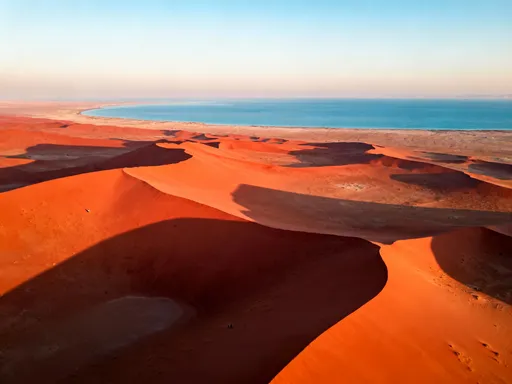
South of Aqaba’s city center, the land flattens into a sweeping expanse of coastal dunes—golden waves of sand sculpted by the wind and bordered by the Red Sea. This is not the vast emptiness of the Rub’ al Khali, but a more intimate dune field that rolls gently toward the water, creating a surreal contrast between desert and ocean. Walking here feels like stepping into a dream: the sand is fine and cool beneath bare feet, the horizon blurs where sea meets sky, and the only sound is the soft whisper of wind over ripples. At sunset, the dunes ignite in hues of amber, copper, and rose, casting long shadows that shift with the fading light.
What makes these dunes special is their accessibility and tranquility. Unlike the crowded dune parks of Dubai or the remote ergs of Morocco, Aqaba’s coastal dunes are quiet, often visited only by a few locals or eco-tourists. There are no vehicles, no music, no commercial setups—just the raw beauty of nature in motion. The dunes are formed by wind patterns that carry sand from the interior desert toward the coast, where some of it settles before being washed back into the sea. This constant exchange creates a dynamic landscape, where shapes change subtly from day to day.
Photographers and nature lovers will find endless inspiration here. The interplay of light and shadow, the texture of wind-carved ripples, and the contrast between the warm sand and cool blue water create compositions that are both dramatic and serene. The best times for photography are the golden hours—just after sunrise and before sunset—when the low angle of the sun enhances depth and dimension. For those seeking solitude, a quiet walk at dusk offers a meditative experience, the kind that clears the mind and renews the spirit.
Visitors should take care not to disturb the fragile dune ecosystem. While it may look barren, the sand hosts microorganisms, insects, and reptiles adapted to extreme conditions. Staying on existing paths and avoiding loud noises helps preserve the peace and balance of this unique environment. Some local guides offer sunset walks that include storytelling about desert cultures and navigation, adding a human dimension to the natural beauty. Whether you come for the views, the photos, or the silence, the coastal dunes of Aqaba offer a rare chance to stand where desert and sea embrace.
Beyond the Beach: How Nature Shapes Local Life
The landscape of Aqaba is not just a backdrop—it’s a living force that shapes the rhythms of daily life. For generations, the people of this region have drawn their livelihoods from the sea and the desert. Traditional fishing remains a vital practice, with small boats setting out at dawn to bring in coral reef fish, kingfish, and shrimp. Along the shore, salt harvesting continues in shallow evaporation pans, where seawater is channeled and left to dry under the sun, leaving behind crystalline salt used in local cuisine. These age-old practices reflect a deep understanding of the environment and a sustainable relationship with natural resources.
In recent years, eco-tourism has emerged as a growing source of income, offering an alternative to mass development. Local Bedouin communities, in particular, have begun leading guided hikes, camel treks, and cultural tours that emphasize environmental stewardship and cultural preservation. These initiatives not only provide economic opportunities but also foster pride in heritage and place. When travelers choose community-based tourism, they support conservation efforts and help ensure that the benefits of tourism stay within the region.
Sustainable development is a priority for local authorities. The Aqaba Special Economic Zone Authority has implemented policies to limit construction in sensitive areas, protect marine habitats, and promote green infrastructure. Solar energy projects, water recycling systems, and waste management programs are part of a broader vision to balance growth with environmental responsibility. These efforts are not always perfect, but they reflect a growing awareness that Aqaba’s future depends on preserving its natural assets.
For visitors, engaging with local guides and supporting eco-conscious businesses is one of the most meaningful ways to travel. A conversation with a fisherman, a shared meal with a Bedouin family, or a hike led by a naturalist can transform a trip from sightseeing to connection. These interactions remind us that nature and culture are intertwined—that the health of the land is reflected in the well-being of the people. In Aqaba, respect for nature is not just a tourist slogan; it’s a way of life.
Planning Your Own Aqaba Adventure: Practical Tips for Deep Exploration
For those ready to explore Aqaba’s wild side, timing is everything. The best seasons to visit are spring (March to May) and autumn (September to November), when temperatures are mild—averaging between 20°C and 30°C (68°F to 86°F)—and the sun is less intense. Summer months can be extremely hot, with daytime temperatures often exceeding 40°C, making outdoor activities uncomfortable without careful planning. Winter is cooler and more variable, but still suitable for hiking and snorkeling, especially in the southern dunes and marine areas.
Transportation is key to accessing Aqaba’s remote landscapes. While the city center is walkable and served by taxis, reaching the wadis, hills, and dunes often requires a 4x4 vehicle. Renting a sturdy SUV with high clearance is recommended, especially for off-road trails that can be rocky or sandy. Many local tour operators offer guided excursions with experienced drivers, which can be a safer and more informative option for first-time visitors. For independent travelers, downloading offline maps and carrying a GPS device is essential, as cell service can be spotty in remote areas.
Accommodation options vary from luxury resorts on the waterfront to eco-lodges tucked into the desert hills. Staying in the city offers convenience and access to restaurants and services, while eco-lodges provide a more immersive experience with minimal environmental impact. Some lodges are run by local communities and include guided nature walks, stargazing sessions, and cultural activities. Choosing sustainable lodging supports conservation and enhances the authenticity of your journey.
Packing wisely ensures comfort and safety. Essential items include a wide-brimmed hat, UV-protective clothing, high-SPF sunscreen (reef-safe), polarized sunglasses, and a reusable water bottle. For hiking, bring a lightweight backpack with extra water, snacks, a first-aid kit, and a basic navigation tool. A good camera or smartphone with a protective case is ideal for capturing the stunning landscapes. Most importantly, carry a mindset of respect—respect for the environment, the culture, and the delicate balance that makes Aqaba so extraordinary.
Conclusion
Aqaba’s true magic lies not in its postcard beaches, but in the raw, untamed landscapes that surround it. From silent canyons to living reefs, this is a destination that rewards curiosity and respect. It invites travelers to move beyond the surface, to hike where few go, to snorkel with awareness, and to listen to the wind in the dunes. The desert and sea are not just scenery—they are teachers, offering lessons in resilience, balance, and the quiet power of nature. When you go, don’t just dip your toes—dive deep into the wild heart of Jordan’s only coastal frontier. Let Aqaba remind you that the most unforgettable journeys are not always the easiest, but the ones that awaken your sense of wonder.