You Won’t Believe These Jodhpur Viewpoints I Stumbled Upon
Jodhpur, India, is more than just the Blue City—it’s a living canvas of color, history, and soul. I went searching for viewpoints and found moments that took my breath away. From sunrise over Mehrangarh Fort to hidden rooftops with endless desert skies, each spot told a story. This is travel at its most real—raw, vibrant, and deeply personal. If you're chasing views that stick with you long after you leave, Jodhpur delivers in ways you never expect.
Arrival in the Blue City – First Impressions That Stick
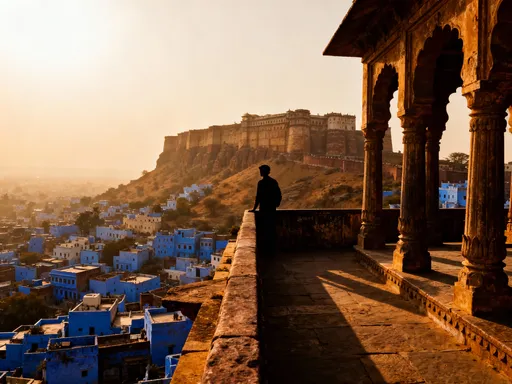
The first glimpse of Jodhpur feels like stepping into a dream painted in indigo and sandstone. As the car winds through the outskirts, the landscape shifts from arid scrubland to a rising tide of blue homes clinging to the base of a massive hill. This is the old town, where thousands of houses are washed in shades of blue—some bright as summer sky, others faded by sun and time into dusty lavender. Locals say the color was once reserved for Brahmin families, a sign of status and spiritual protection, but today it’s a symbol of identity, unity, and beauty in the face of a harsh climate.
The sensory overload begins immediately. The air carries the scent of cumin and turmeric from roadside food stalls, mingling with the dry desert wind. Auto-rickshaws beep in rhythmic chaos, bicycles weave through traffic, and the occasional cow ambles across the road with regal indifference. The narrow lanes of the old city feel alive—cluttered with laundry lines, baskets of spices, and hand-painted signs in Hindi and English. Yet, just above, the sky stretches wide and uninterrupted, a vast canvas that promises perspective.
What sets Jodhpur apart from other Indian cities is this contrast—intimate, human-scale streets below, and grand, elevated vistas above. Unlike the flat sprawl of Delhi or the coastal curves of Goa, Jodhpur is built on elevation, both physical and metaphorical. The city climbs, literally, toward its crown: Mehrangarh Fort. Every upward step brings not just cooler breezes but a shift in understanding. You begin to see patterns—the way the blue homes cluster like brushstrokes, how the fort looms as both protector and observer. Arrival here doesn’t just mark the start of a trip; it sets the tone for a journey of elevation, one viewpoint at a time.
Mehrangarh Fort at Dawn – A View That Defines Jodhpur
There’s a stillness in Jodhpur before the city fully wakes—a hush broken only by distant birdsong and the soft shuffle of early risers. It’s in this quiet that the climb to Mehrangarh Fort feels most sacred. Perched 400 feet above the city on a sheer rock cliff, the fort has guarded Jodhpur since 1459, a sentinel through wars, droughts, and centuries of change. Reaching it at dawn, before the tour buses arrive, is to witness the city being born anew with each sunrise.
The path upward is steep, flanked by ancient stone walls and guarded by life-sized statues of royal figures. As the first light creeps over the eastern hills, the sky shifts from deep indigo to soft gold. Then, suddenly, the city unfolds below—a sea of blue rooftops rippling toward the horizon, dotted with temple spires and palm trees. To the west, the rugged Aravalli Range fades into the distance, while Rao Jodha Desert Park, a restored ecological reserve, adds texture with its native scrub and volcanic rock formations.
This vantage point is unmatched not just for its beauty but for its narrative power. From here, you see how Jodhpur grew—not outward, but upward, constrained by water scarcity and defense needs. The blue homes cluster tightly beneath the fort, a testament to community and survival. The fort itself, with its seven massive gates and intricate jharokhas (balconies), speaks of resilience. Standing on its ramparts, you’re not just observing a view; you’re stepping into history. The wind carries whispers of Rajput valor, of Maharajas who ruled from these walls, of battles fought to protect this land.
Photographs capture the colors, but they can’t hold the feeling—the sense of smallness in the face of such grandeur, the awe of seeing a city come alive from above. This is the view that defines Jodhpur, not because it’s the highest, but because it connects past and present in a single, sweeping glance.
The Secret Rooftop Stay – Waking Up Above the Old Town
Not all great views require a fortress climb. Some are best found in stillness, in the quiet luxury of a heritage guesthouse tucked into the heart of the old city. I stayed at a restored haveli, a former merchant’s home, where the real treasure wasn’t the carved wooden doors or antique furniture, but the private rooftop accessible only to guests. Here, above the noise and dust, I found a perch that offered intimacy no crowded fort balcony could match.
Sunset transformed the city into a glowing mosaic. The sun dipped behind the hills, casting long shadows across the blue houses, turning their walls into shades of violet and charcoal. The sky blazed in streaks of orange and pink, reflected in the glass of satellite dishes and rooftop water tanks. Below, families gathered on their terraces, children played catch, and laundry swayed like flags in the evening breeze. The call to prayer drifted from a nearby mosque, a melodic echo that softened the city’s usual clamor.
But it was sunrise that left the deepest impression. Waking before six, wrapped in a shawl against the desert chill, I watched the city slowly stir. The first light touched the highest minarets, then spilled down into the alleys, revealing shopkeepers unlocking their stalls, chai wallahs lighting their stoves, and delivery boys balancing stacks of bread on their heads. From this height, the chaos made sense—each movement part of a rhythm, each life a thread in a larger tapestry.
Staying in a rooftop haveli isn’t just about comfort; it’s about immersion. You’re not observing Jodhpur from a distance—you’re part of its daily breath. The absence of crowds, the lack of guided narratives, the freedom to sit and simply watch—these are the privileges of slow travel. And in a world where tourism often feels transactional, this kind of view—personal, unfiltered, deeply human—feels like a gift.
Toorji Ka Jhalra – Where Water Meets Urban Life
Stepwells are among India’s most poetic architectural forms, built not just for function but for beauty and community. Toorji Ka Jhalra, restored in 2016 after decades of neglect, is one of Jodhpur’s most vibrant. Located just outside the clock tower in the Sardar Market area, it descends seven levels into the earth, a spiral of sandstone arches and carved pillars that lead to a pool of still water at its heart.
But Toorji Ka Jhalra is more than a monument—it’s a living viewpoint. While most tourists look down into it from the street level, the real experience comes from descending its steps and looking up. From below, the structure frames the sky in perfect symmetry, the arches creating a series of golden circles as sunlight filters through. Women in bright saris—fuchsia, saffron, emerald—gather at the lower levels, filling brass pots with water. Children dart between the pillars, their laughter echoing off the ancient stone. Elderly men sit on shaded benches, watching the scene with quiet contentment.
This is where urban life and heritage converge. The stepwell, once a vital water source, now serves as a social hub—a place to meet, rest, and reflect. The downward perspective is unique in Jodhpur, where most viewpoints elevate you above the city. Here, you go beneath the surface, both literally and metaphorically. You see the city from a forgotten angle, one that emphasizes depth, community, and the quiet dignity of daily rituals.
The restoration of Toorji Ka Jhalra is a model of sustainable heritage work. Local artisans used traditional techniques and materials, ensuring the stepwell’s authenticity. Today, it stands as a reminder that preservation isn’t just about saving buildings—it’s about revitalizing spaces where people still live, work, and connect. From this vantage, the view isn’t just scenic; it’s hopeful.
Mandore Gardens – Elevated Paths and Quiet Vistas
Just three kilometers north of Jodhpur’s bustling center, Mandore Gardens offers a striking contrast—a place of shade, silence, and contemplative beauty. Once the capital of the Marwar region before Jodhpur, Mandore is now a peaceful retreat of lush greenery, ancient temples, and royal cenotaphs (known as devals) built in the 17th and 18th centuries. Unlike the imposing fort or the crowded markets, this site invites slow exploration along elevated stone walkways that meander through groves of ashoka and neem trees.
The viewpoints here are softer, more reflective. From the raised pathways, you look out over intricately carved memorials, each dedicated to a former ruler. These devals, with their pillared halls and domed roofs, rise like stone flowers from the earth. Some are adorned with faded murals, others with statues of gods and elephants. The surrounding greenery softens their edges, creating a harmony between nature and human creation. In the early morning, mist clings to the ground, and the air is cool and fragrant with jasmine.
What makes Mandore special is its stillness. There are no loud guides, no souvenir hawkers, no rush to move from one spot to the next. You can sit on a bench, watch sunlight filter through the trees, and absorb the quiet dignity of the place. The elevated paths offer gentle vantage points—not sweeping panoramas, but intimate glimpses of carved details, fluttering prayer flags, and the occasional peacock strutting across the lawn.
For photographers, the garden offers depth and texture—layers of green, shadow, and stone. For travelers seeking respite, it provides emotional elevation. After the intensity of the old city, Mandore feels like a deep breath. It reminds you that not all great views are dramatic; some are found in the pause between moments, in the beauty of what endures quietly.
Beyond the City – Bumpy Rides to Desert Outposts
Sometimes, the most unforgettable views come from going off-script. One afternoon, I hired a local driver and asked him to take me “somewhere quiet, somewhere high.” What followed was a 45-minute drive along dusty rural roads, past fields of cumin and clusters of mud-walled villages, until we reached a low ridge on the edge of a small farming community. There, half-hidden among thorny scrub, stood the remains of an old watchtower—likely used centuries ago to spot approaching caravans or raiders.
The climb was rough, the stones uneven and sun-baked, but the reward was immediate. From the top, the desert stretched in every direction—an endless expanse of golden-brown earth, dotted with acacia trees and the occasional grazing goat. The sky was immense, a dome of pale blue meeting the land in a soft haze. In the distance, a line of wind turbines turned slowly, a quiet contrast to the timeless landscape. No crowds, no signs, no entrance fee—just raw, unfiltered Rajasthan.
The journey itself was part of the experience. My driver, Ramu, pointed out local landmarks: a sacred banyan tree, a hand-pump well where women gathered, a school with children waving as we passed. He spoke of water scarcity, of how the monsoon changes everything, of how families have lived on this land for generations. From this vantage, the view wasn’t just visual—it was emotional, rooted in resilience and connection to the earth.
These off-the-map moments are rare but invaluable. They require flexibility, a bit of trust, and a willingness to embrace the bumpy ride—literally and figuratively. But they offer something no guidebook can: authenticity. In a world where tourism often follows predictable paths, venturing beyond the city limits reminds us that discovery still exists, and that some of the best views come without a name.
Why Viewpoints Matter – More Than Just a Photo
In an age of Instagram and instant sharing, it’s easy to reduce travel to a collection of images. But the true value of a viewpoint lies not in the photograph, but in the moment of pause it creates. Each time I climbed to a higher place in Jodhpur—whether a fort, a rooftop, or a desert ridge—I didn’t just see the city more clearly. I saw myself more clearly.
From above, the chaos of the streets transformed into patterns. The honking scooters, the tangled wires, the crowded markets—all of it made sense from a distance. Perspective doesn’t erase complexity; it helps us understand it. These elevated moments offered more than scenery; they offered clarity. They reminded me that life, like a city, is best understood not from within the noise, but from moments of stillness and height.
Viewpoints also connect us to culture in a deeper way. Standing on Mehrangarh’s ramparts, I felt the weight of history. On my rooftop at dawn, I witnessed the rhythm of daily life. At Toorji Ka Jhalra, I saw tradition in action. Each vantage point was a window into Jodhpur’s soul—a place shaped by drought, devotion, and resilience. To see it from above is to understand it not as a postcard, but as a living, breathing entity.
And perhaps that’s the greatest gift of travel: the ability to rise above the ordinary. Not to escape life, but to see it more fully. In Jodhpur, every climb, every quiet perch, every moment of looking out instead of down, became a small act of reflection. These viewpoints didn’t just show me a city—they changed how I see the world.
Jodhpur doesn’t just offer views—it offers visions. Each viewpoint becomes a memory etched in light and shadow, a reminder that the best travel experiences come not from checking boxes, but from looking deeper. Choose to rise above the street level, and you’ll see not just a city, but a soul.