Tahiti’s Best-Kept Food Secrets: A Slice of Paradise You Can Taste
Imagine biting into a fresh poisson cru as the turquoise lagoon shimmers beside you, the breeze carrying the scent of coconut and grilled fish. Bora Bora isn’t just a postcard dream — it’s a culinary journey hidden beneath the overwater bungalows and luxury resorts. Few realize that the real magic lies in the local markets, family-run rā’āmi stands, and island-grown flavors waiting to be discovered. While many visitors savor gourmet interpretations of Polynesian cuisine from resort kitchens, the soul of Tahitian food lives in everyday moments: a grandmother steaming fish in banana leaves, a fisherman grilling mahimahi over an open flame, or children sharing sweet taro at a village gathering. This is food shaped by isolation, tradition, and deep respect for the land and sea — and it’s accessible to those willing to step beyond the brochure.
The Real Flavor of Bora Bora: Beyond Resort Menus
Tahiti’s culinary reputation often orbits around luxury resorts serving elegantly plated interpretations of island cuisine — refined, beautiful, and undeniably delicious. Yet for travelers seeking authenticity, the true essence of Bora Bora’s food culture unfolds far from the polished dining rooms and curated tasting menus. The heartbeat of Tahitian cooking pulses in modest kitchens, roadside grills, and backyard feasts where meals are made not for presentation, but for nourishment, tradition, and community. These are places where recipes are passed down orally, where ingredients are used the same day they’re harvested or caught, and where flavor is born not from technique, but from generations of island wisdom.
What sets local cuisine apart is its deep connection to the environment. With limited arable land and a reliance on the surrounding ocean, Tahitian cooking is defined by resourcefulness. Staples like taro, breadfruit, coconut, and fresh fish aren’t just common — they’re essential. Dishes such as ura, or grilled lobster, are not tourist attractions but family favorites, often prepared simply with salt, lime, and a touch of coconut oil. Similarly, fish wrapped in banana leaves and slow-cooked over hot stones is a method perfected over centuries, preserving moisture and infusing subtle earthy notes. These preparations reflect a lifestyle rooted in sustainability and respect for nature, where nothing is wasted and every ingredient has purpose.
For the mindful traveler, choosing to explore food beyond the resort isn’t just a culinary adventure — it’s a cultural immersion. It means understanding that a meal is more than sustenance; it’s a story of survival, celebration, and identity. When you eat like a local, you’re not just tasting flavors — you’re experiencing the rhythm of island life. The contrast between a five-star reinterpretation of poisson cru and the version served at a family lunch on the beach isn’t about quality, but context. One is crafted for aesthetics, the other for connection. And it’s that connection — to people, place, and tradition — that transforms a simple meal into a lasting memory.
Where the Locals Eat: Finding Hidden Eateries
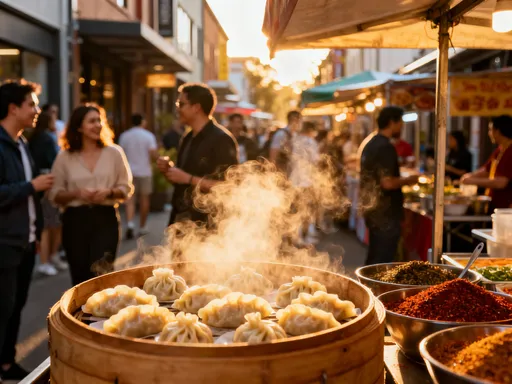
Discovering where residents of Bora Bora eat requires shifting perspective — away from guidebooks and review platforms, and toward observation, intuition, and openness. The island’s most authentic food experiences are rarely found behind glossy signage or on digital maps. Instead, they thrive in unassuming spots: a weathered wooden stand near the Vaitape harbor, a pop-up grill outside a church on Sunday afternoon, or a floating vendor selling snacks from a small boat moored near the jetty. These places operate on rhythm, not hours, and their presence is often announced not by advertisements, but by the scent of grilled fish, the sound of laughter, or the sight of locals lining up with reusable containers.
One of the most reliable indicators of a genuine eatery is a gathering of locals. If you see families, fishermen, or schoolchildren stopping for a quick meal, you’ve likely found a trusted spot. These places, often run by a single family, serve a short but consistent menu — perhaps poisson cru, grilled chicken with coconut rice, or banana-wrapped fish. They may not have restrooms or Wi-Fi, but they offer something far more valuable: authenticity. The food is made fresh each day, using ingredients sourced from nearby waters or family plots, and the prices remain modest, reflecting the island’s informal economy.
Language can be a gentle bridge. While many Tahitians speak English, especially in tourist areas, making an effort to use simple phrases in Reo Mā’ohi or French can open doors. A warm “Ia ora na” (hello) or “Māuruuru roa” (thank you very much) often leads to smiles, small talk, and even recommendations. Vendors may offer samples, explain how a dish is made, or share stories about their family’s recipes. These interactions, brief as they may be, enrich the experience and foster mutual respect.
Some of the most memorable meals happen spontaneously. A roadside stand selling grilled mahimahi sandwiches may appear only in the late afternoon. A village feast might be set up for a birthday or religious celebration, with outsiders welcome to observe or even join. These moments aren’t staged for tourists — they’re part of daily life. By staying curious and flexible, visitors can witness and participate in the living culture of Tahitian food, one humble meal at a time.
Must-Try Dishes: A Taste of Tahiti
To understand Tahiti through its cuisine is to engage all the senses — the sight of vibrant yellow tuna marinated in creamy coconut milk, the sound of breadfruit sizzling over an open fire, the aroma of taro leaves simmering with lime and chili. At the center of this sensory experience is poisson cru, widely regarded as the national dish of French Polynesia. Made with ultra-fresh raw tuna, finely diced and soaked in lime juice until it turns opaque, then blended with rich coconut milk, chopped cucumber, and tomato, poisson cru is a celebration of simplicity and freshness. Its texture is silky, its flavor bright and subtly sweet, a perfect reflection of the island’s marine abundance.
Equally essential is fafa, a dish made from taro leaves cooked slowly with coconut cream, onion, and sometimes octopus or fish. The leaves, when properly prepared, have a soft, almost spinach-like consistency, while the coconut milk adds a velvety richness. Fafa is often served alongside rice or breadfruit and is a staple at family gatherings. It’s a dish that speaks to the island’s agricultural roots, where root vegetables are not just food, but heritage.
Ta’amu, or fermented breadfruit, offers a more adventurous palate. Breadfruit is a cornerstone of Polynesian agriculture, and when fermented in underground pits for several weeks, it develops a tangy, sour flavor similar to aged cheese or kimchi. Though an acquired taste for some, ta’amu is deeply valued for its longevity and nutritional density. It can be eaten on its own, mixed with coconut milk, or used as a base for other dishes. Its preparation is a labor of patience, reflecting the islanders’ long-standing relationship with preservation and seasonal cycles.
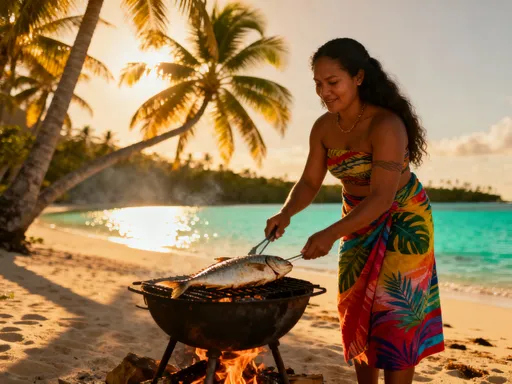
Grilled fish, particularly mahimahi and tuna, is another daily favorite. Cooked over open flames fueled by driftwood or coconut husks, the fish absorbs a delicate smokiness that enhances its natural flavor. It’s often seasoned with nothing more than sea salt, lime, and a drizzle of coconut oil. Served on a banana leaf with a side of roasted breadfruit or taro, it’s a meal that feels both primal and refined. These dishes, though simple in composition, carry the weight of centuries — each bite a link to the navigators, farmers, and fishers who shaped Tahitian life.
How to Experience a Traditional Ma’a Tahiti
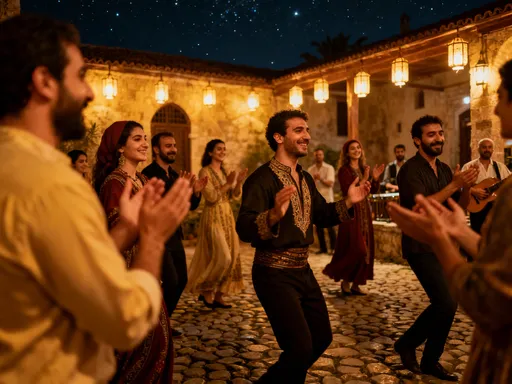
One of the most profound ways to experience Tahitian food culture is through a ma’a Tahiti, a traditional feast that transforms cooking into a communal art form. Held for celebrations such as weddings, baptisms, or community festivals, the ma’a Tahiti centers around the ahima’a, an earth oven dug into the ground and heated with volcanic stones. The preparation begins hours — sometimes a full day — in advance, as families gather to prepare ingredients, weave banana leaves, and tend the fire. The process itself is a ritual, one that binds generations and reaffirms cultural identity.
The cooking method is as remarkable as the meal. Once the stones are heated to high temperatures, layers of banana leaves line the pit, followed by marinated meats, whole fish, breadfruit, taro, and chicken, all wrapped tightly in more leaves to lock in moisture. The entire oven is then covered with more leaves, burlap sacks, and sometimes wet cloths to trap steam. Over the next several hours, the food slow-cooks in its own juices, emerging tender, fragrant, and infused with earthy, smoky notes. The unveiling of the ahima’a is a moment of collective joy — the banana leaves are peeled back, and the aroma of coconut, citrus, and roasted meat fills the air.
For visitors, attending a ma’a Tahiti is a privilege that requires respect and humility. While some resorts offer staged versions of the feast for guests, the most authentic experiences occur in villages and are often organized through cultural tours or personal invitations. It’s important to observe local customs: dress modestly, arrive on time, and express gratitude. Seating is usually on mats or low stools, and eating is done by hand or with simple utensils. The meal is served buffet-style, with everyone encouraged to take only what they will eat, reflecting the cultural value of avoiding waste.
Photography is welcome, but discretion is key. Always ask permission before taking pictures of people, and avoid disrupting the flow of the event. The beauty of the ma’a Tahiti lies not just in the food, but in the unity it fosters — elders sharing stories, children laughing, hands passing dishes from one person to the next. To witness this is to understand that in Tahiti, food is never just fuel; it’s a language of love, memory, and belonging.
Local Markets & Food Tours: A Gateway to Culture
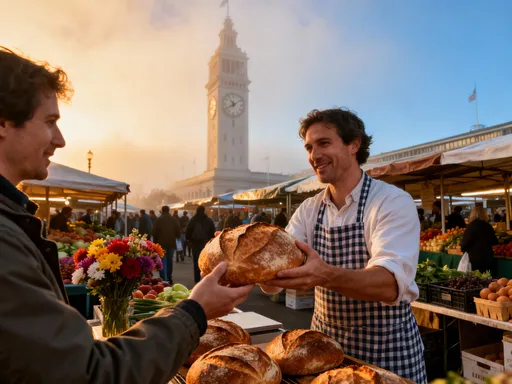
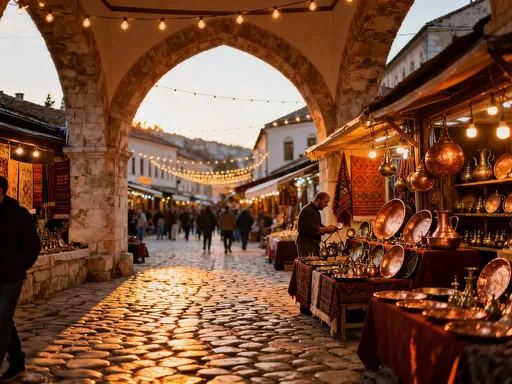
The Vaitape market, the island’s main village hub, is a living canvas of Bora Bora’s food identity. Open several days a week, it brims with color, scent, and sound — baskets overflowing with breadfruit, pyramids of limes, and trays of glistening tuna laid out on ice. Vendors sit under wide hats, shading themselves from the sun as they offer samples of nono, a spiky yellow fruit with a sweet-tart flavor, or cups of freshly pressed sugarcane juice. This is not a market designed for souvenirs; it’s a place where locals shop, trade, and connect.
For visitors, the market is an invitation to slow down and engage. A simple “Keitea?” (How much?) can spark a conversation. A vendor might explain how breadfruit is best cooked when slightly underripe, or how coconut is used in every part of a meal — the milk in sauces, the oil for grilling, the husk for fuel. Children might offer a taste of roasted banana, their hands sticky with sap. These small interactions are the heartbeat of cultural exchange, far more meaningful than any pre-packaged tour.
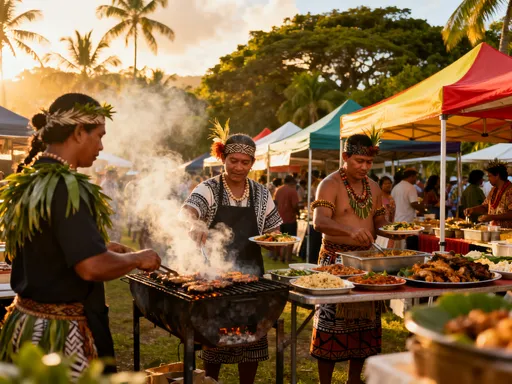
Smaller, pop-up markets in outer villages offer even deeper insight. These gatherings, often tied to church events or harvests, feature hyper-local produce and homemade dishes. You might find po’e, a baked pudding made from banana or pumpkin and coconut cream, or rā’āmi, a type of savory turnover filled with fish or chicken. These foods are not made for export or aesthetics — they’re made for family, for tradition, for comfort.
Guided food walks, when led by knowledgeable locals, can enhance understanding without commercializing the experience. A good guide doesn’t just point out items — they explain the agricultural cycles, the significance of certain ingredients, and the history behind common dishes. They might show you how taro is grown in flooded patches, or how coconut crabs are sustainably harvested. The goal isn’t luxury, but context: helping visitors see food not as a commodity, but as a thread in the fabric of island life.
Eating Sustainably: Respecting Island Resources
Bora Bora’s breathtaking beauty is matched only by its ecological fragility. With limited landmass, no large-scale agriculture, and a delicate marine ecosystem, the island’s food system operates under unique constraints. Most fresh produce is grown in small family plots, while seafood is caught daily by local fishers using sustainable methods. Staples like rice, flour, and canned goods are imported, making them more expensive and less desirable than local alternatives. Understanding this context is essential for responsible travel.
Locals have long practiced sustainability out of necessity. Fishing is done in rotation, allowing reefs to regenerate. Breadfruit and taro are harvested seasonally, respecting natural cycles. Even coconut, one of the most versatile ingredients, is used in its entirety — the meat for food, the milk for cooking, the shell for utensils, the husk for fuel. This holistic approach minimizes waste and honors the island’s finite resources.
Travelers can support these efforts by making mindful choices. Opting for restaurants and vendors that source locally reduces demand for imported goods and supports small producers. Avoiding overconsumption of seafood, especially endangered species like certain types of grouper or shark, helps protect marine biodiversity. Choosing reusable containers over plastic and declining single-use packaging when possible also makes a difference.
Eating sustainably isn’t about sacrifice — it’s about alignment. When you choose a grilled mahimahi sandwich from a family stand over a frozen import, or sample po’e made from island-grown banana, you’re not just enjoying better flavor — you’re participating in a tradition of care. You’re acknowledging that paradise is not infinite, and that every bite carries responsibility. By eating like a local, you honor not just the cuisine, but the culture and ecosystem that make it possible.
From Plate to Post: Capturing Food That Tells a Story
In the age of social media, food photography has become a universal language. A well-composed image of poisson cru beside a turquoise lagoon can inspire wanderlust in thousands. But beyond aesthetics, the most powerful food images are those that tell a story — not just of flavor, but of people, place, and purpose. The wrinkled hands of an elder peeling a coconut, the smoke rising from a beachside grill at sunset, a child’s delighted grin after biting into a ripe mango — these moments capture the soul of Tahitian cuisine in a way no flat lay ever could.
For those looking to document their culinary journey, the key is authenticity over perfection. Natural light, especially in the early morning or golden hour, enhances texture and color without artificial filters. Focus on details: the glisten of coconut milk on tuna, the weave of a pandanus leaf basket, the char on grilled breadfruit. But don’t stop at the plate. Include context — the hands that prepared the food, the setting where it’s shared, the laughter around a communal table. These elements transform a simple photo into a narrative.
Respect is paramount. Always ask before photographing people, especially during sacred or private moments like a ma’a Tahiti. Some families may welcome the attention; others may prefer privacy. When in doubt, put the camera down and simply be present. The memory of sharing a meal, of tasting something extraordinary in the company of kind strangers, often outlasts any image.
Ultimately, the goal of food photography in Bora Bora should not be to impress, but to honor. Your images can educate, inspire, and preserve — but only if they reflect truth. When your feed shows not just beautiful food, but real connection, you contribute to a deeper understanding of Tahiti. You move beyond the postcard and into the heart of the island, where flavor, culture, and respect are inseparable. And that, more than any perfect shot, is worth sharing.